“Guided Imagery” (or just ‘Imagery’) is defined as the use of words and/or music to evoke positive imaginary scenarios in a subject with a view to bringing about some beneficial effect.
Guided imagery and meditation has been utilized for millennia as a means of medical therapy. While we have hard evidence of Tibetan monks using these techniques in the 13th century, many believe it dates back to ancient Rome and Greece.
Five types of guided imagery are usually practiced: (1) pleasant imagery such as imagery of a peaceful location; (2) physiologically-focused imagery such as imagery of white cells fighting disease or cancer cells; (3) mental rehearsal such as successfully performing a public task; (4) mental reframing such as imagery that reinterprets a past experience and its associated emotions; and (5) receptive imagery that involves scanning the body for diagnostic or reflective purposes.
In this post we have listed 5 extreme examples of successful guided imagery, visualizations, and/or meditation to overcome chronic illness, disease, and/or pain. Please take note: not everybody using these methods will have results this successful.
David Seidler
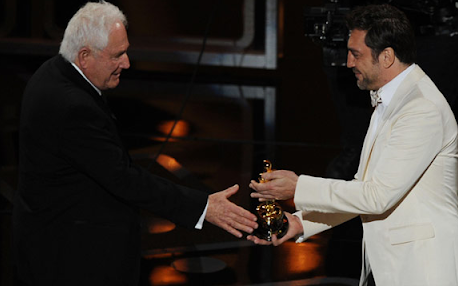
One of the most famous examples involves the director of The King’s Speech (2010), David Seidler. In 2005 Seidler was diagnosed with bladder cancer. He decided against chemotherapy and chose instead to go the route of supplements and surgery. This all came about during divorce proceedings with his then-wife of 30 years, so the stress was very real.
However, while awaiting surgery he had a crazy idea wash over him: what if I went in for surgery and the cancer was gone? Seidler began visualizing a perfect, cream-colored, unblemished bladder for hours a day. Sure enough, the day he went in for surgery the doctors approached him in a state of shock. They re-ran tests from his initial biopsy which all confirmed he did indeed have cancer of the bladder…but it had disappeared.
“I know it sounds awfully Southern California and woo-woo,” said Seidler. “But that’s what happened.”
To Dr. Christiane Northrup, a best-selling author who’s written extensively on the mind-body connection, that sounds like science.
“The mind has the power to heal.”
She says by removing himself “from fear and abject terror into action,” Seidler actually changed his body’s chemistry. “Fear increases cortisol and epinephrine in the body, which over time lower immunity,” she says.
High levels of the two stress hormones lead to cellular inflammation, which is the way cancer begins, Northrup says. Taking action, as Seidler eventually did, decreases hormones, creating an actual scientific explanation for David’s miraculous recovery – not at all ‘woo-woo’.
Cassie Moore

Cassie Moore needed a colectomy to survive. Recurring infections sent her rushing to the hospital and if she didn’t have a section of her colon removed, the fear was, it could burst and that could have very well spelled doom for Cassie.
As she awaited the day of her surgery, Cassie became enveloped in stress.
“I found myself dwelling on all the negatives, the ‘What ifs’….all the possible dark places a person can go.”
She was so stressed out that she had convinced herself she would die during surgery. That’s when a good friend intervened, introducing Cassie to a therapist specializing in pre-surgical preparations.
The therapist taught Cassie how to utilize guided imagery, channelling her anxiety into healing, peaceful thought.
“I listened to imagery tapes. In these tapes the visualization was to go to a peaceful serene spot in nature, where you find peace, calm and solitude. After which, the tapes guided you through the surgery. The operating room, instead of a place of terror, was a safe place of healing, where competent, good people who loved you were taking every step to ensure the best possible outcome.”
She was then able to have the tapes played during the surgery. Cassie fell asleep to calming visions.
The next day she was visited by no less than 12 doctors at the University of Chicago, all of whom were dumbfounded about how quickly she was recovering. After explaining her process, they said her recovery was absolutely unprecedented.
The expected hospital stay for recovery from this type of surgery is 8-10 days. Cassie ended up spending 4 days in the hospital and has not had a single complication since.
Wim Hof
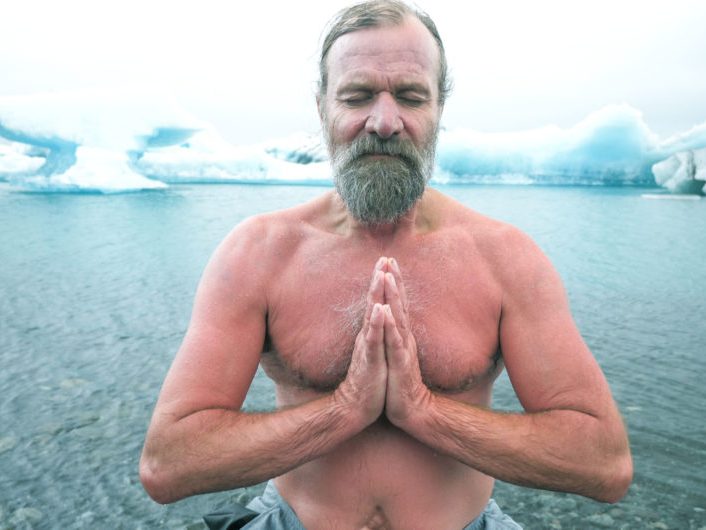
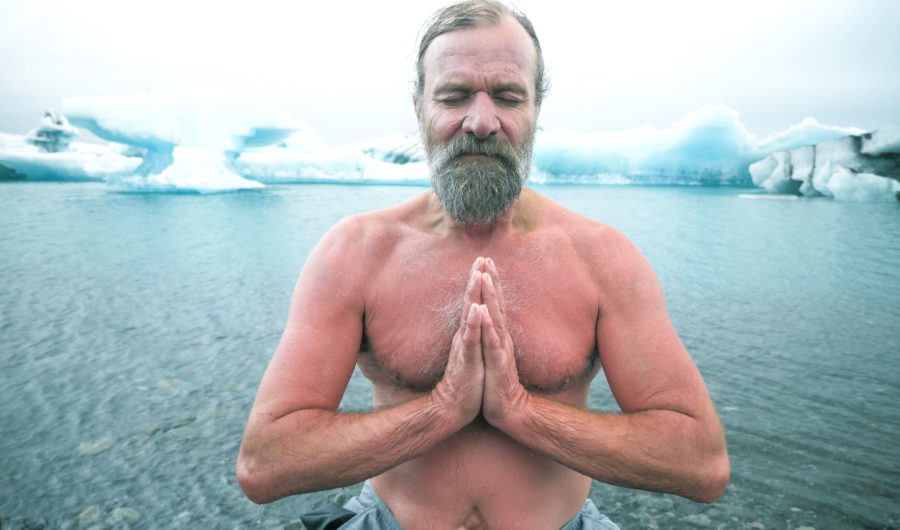
Wim Hof, owner of 26 Guinness World Records, is no stranger to mind-over-matter. In fact, he has created and perfected certain techniques – coining them together as the Wim Hof Method.
The man has done incredible things. He’s run a marathon through a desert without drinking any water. He’s climbed Mt. Kilimanjaro barefoot. Wim has broken the world record for longest time in direct, full-body contact with ice a total of 16 times.
Mr. Hof uses third-eye meditation – a type of unguided visualization exercise to completely relax the mind. He then utilizes a combination of cold-exposure activities and specialized breathing techniques until he has complete control over his body.
In 2011, a team of medical researchers at Radboud University in the Netherlands wanted to put his Method to the test. They subjected Wim (who was a very willing participant, it should be said) to an endotoxemia experiment. In this experiment bacteria is injected into the body, causing flu-like symptoms for several hours.
What the researchers wanted to test was Hof’s resistance to this, to see whether or not his method showed tangible, scientific results. Normally when exposed to the bacteria people experience fever, headaches, chills, nausea, and or shivering for a few hours. Wim had almost no symptoms.
“When we measured inflammatory markers in his blood they were much, much lower than they were in the large groups of subjects we have studied with in endotoxemia experiments in the past fifteen years.”
Wim’s blood work showed that his levels of the autonomic nervous system hormone epinephrine were extremely high.
“So we could hypothesize that very high levels of epinephrine could suppress the immune response. But because this was a case study of only one subject, the results cannot serve as scientific evidence to support that hypothesis. You need to have a controlled group study.”
That’s when Wim stated: “Okay, you want to do this in group? That’s no problem. I’m not special. I can teach this to anybody.”
Not long after, the research team put together two groups; one that Hof would train to use the Wim Hof Method during the experiment, and a control group.
“We injected members of each group with those same bacterial compounds to induce an inflammatory response, and lo and behold, what we saw was that the group trained by Wim had much lower levels of inflammatory mediators in the blood, as well as fewer and less intense symptoms, including fever. We also found that when subjects practiced the breathing technique, epinephrine levels in the blood went very high.”
Still more research needs to be completed in order for the medical community to come out and say the Wim Hof Method is a recommended form of treatment, or method of managing autoimmune disease, but the hope is that it will eventually empower patients to actually be able to do something about their disease.
 Integrative Health Resource